
Bowl dinners are my weeknight secret weapon, and this Maple Dijon Chicken Bowl is one I come back to again and again. It’s cozy without being heavy, wholesome without being boring, and full of flavor thanks to that tangy-sweet maple Dijon glaze. Juicy roasted chicken pairs beautifully with caramelized sweet potatoes and colorful veggies, making every bite feel satisfying and comforting.
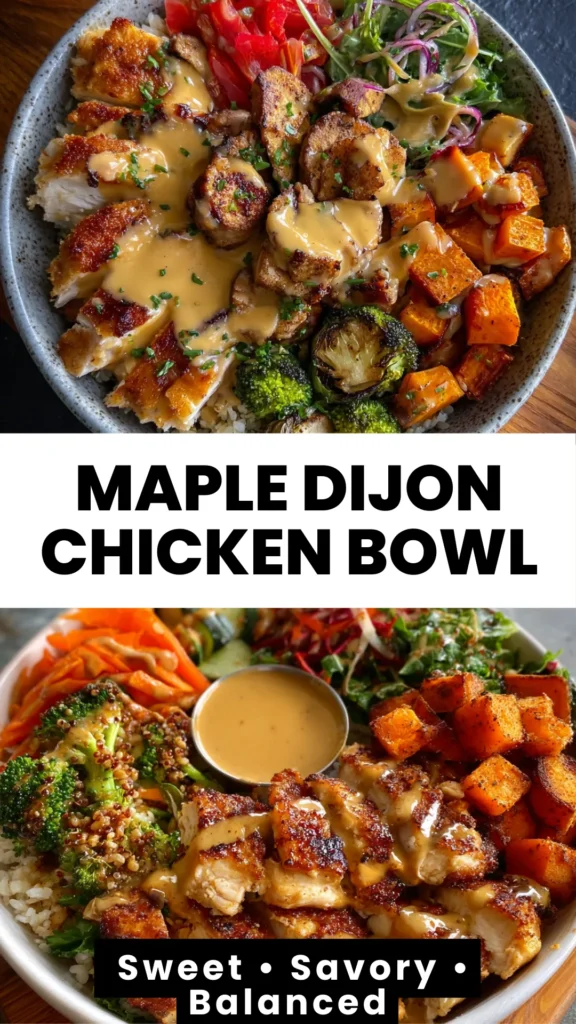
What I love most is how flexible this bowl is. It works just as well for meal prep as it does for a relaxed family dinner. Add your favorite grain, keep it low-carb, or load it up with toppings — it adapts to your mood and your schedule. If you’re looking for a gluten-free chicken bowl that tastes like something special but fits real life, this one’s for you.
Why This Maple Dijon Chicken Bowl Works So Well
- Sweet-and-savory glaze with bold flavor
- Naturally gluten free and dairy free
- Balanced with protein, veggies, and carbs
- Great for meal prep and leftovers
- Easy to customize with seasonal vegetables
This is the kind of recipe that makes healthy eating feel effortless.
Ingredients for Maple Dijon Chicken Bowl
Main ingredients
- Boneless, skinless chicken breasts or thighs
- Sweet potatoes, peeled and cubed
- Broccoli florets
- Bell peppers, sliced
- Red onion, sliced
- Olive oil
- Salt and black pepper
Maple Dijon glaze
- Dijon mustard
- Pure maple syrup
- Garlic, minced
- Apple cider vinegar or lemon juice
- Olive oil
Optional bowl bases & toppings
- Cooked rice, quinoa, or farro
- Pumpkin seeds or pecans
- Fresh parsley or thyme
- Extra drizzle of maple Dijon sauce
Chef André’s substitutions
- Swap sweet potatoes for butternut squash
- Use Brussels sprouts instead of broccoli
- Replace maple syrup with honey if needed
- Choose chicken thighs for extra juiciness
Step-by-Step Preparation – Guided by Chef André
Roast the vegetables
Preheat the oven and toss sweet potatoes, broccoli, peppers, and onion with olive oil, salt, and pepper. Spread evenly on a sheet pan and roast until tender and lightly caramelized.
Prepare the maple Dijon chicken
Whisk together Dijon mustard, maple syrup, garlic, vinegar, and olive oil. Coat the chicken generously with the glaze.
Roast the chicken
Add the chicken to the pan (or use a second pan) and roast until fully cooked and beautifully glazed, flipping once for even browning.
Assemble the bowls
Slice the chicken and layer it over roasted vegetables and your grain of choice. Finish with extra sauce and toppings.
Chef André’s Creative Variations
- Low-carb bowl: Skip grains and add more veggies
- Spicy version: Add chili flakes or chili oil to the glaze
- Fall-inspired: Add roasted apples or cranberries
- Mediterranean twist: Finish with olives and fresh herbs
Chef’s Tips for Best Results
- Cut vegetables evenly for even roasting
- Don’t overcrowd the pan — space helps caramelization
- Use real maple syrup for depth of flavor
- Let chicken rest a few minutes before slicing
How to Serve Maple Dijon Chicken Bowls
- Over fluffy rice or quinoa
- As a hearty salad base with greens
- Packed into meal-prep containers
- With a simple lemony side salad
These bowls taste just as good the next day.
Meal Prep, Storage & Reheating
- Store in airtight containers up to 4 days
- Reheat gently in the microwave or skillet
- Add fresh toppings after reheating
- Keep extra sauce separate for best texture
AQ – Maple Dijon Chicken Bowl
Is this good for meal prep?
Yes, it’s ideal for make-ahead lunches and dinners.
Can I grill the chicken instead?
Absolutely — grilled chicken works beautifully here.
Can I make it dairy free?
Yes, it’s naturally dairy free as written.
Approximate Nutrition (per serving)
- Calories: ~480
- Protein: ~38g
- Carbs: ~42g
- Fat: ~18g
Conclusion – From Chef André
This Maple Dijon Chicken Bowl brings together everything I love about everyday cooking: bold flavor, simple prep, and real comfort. It’s nourishing without feeling restrictive and flexible enough to fit any schedule.
If you try it, let me know how you built your bowl. And for safe handling of cooked poultry and leftovers, always refer to USDA Food Safety guidelines:
👉 https://www.fsis.usda.gov/food-safety