
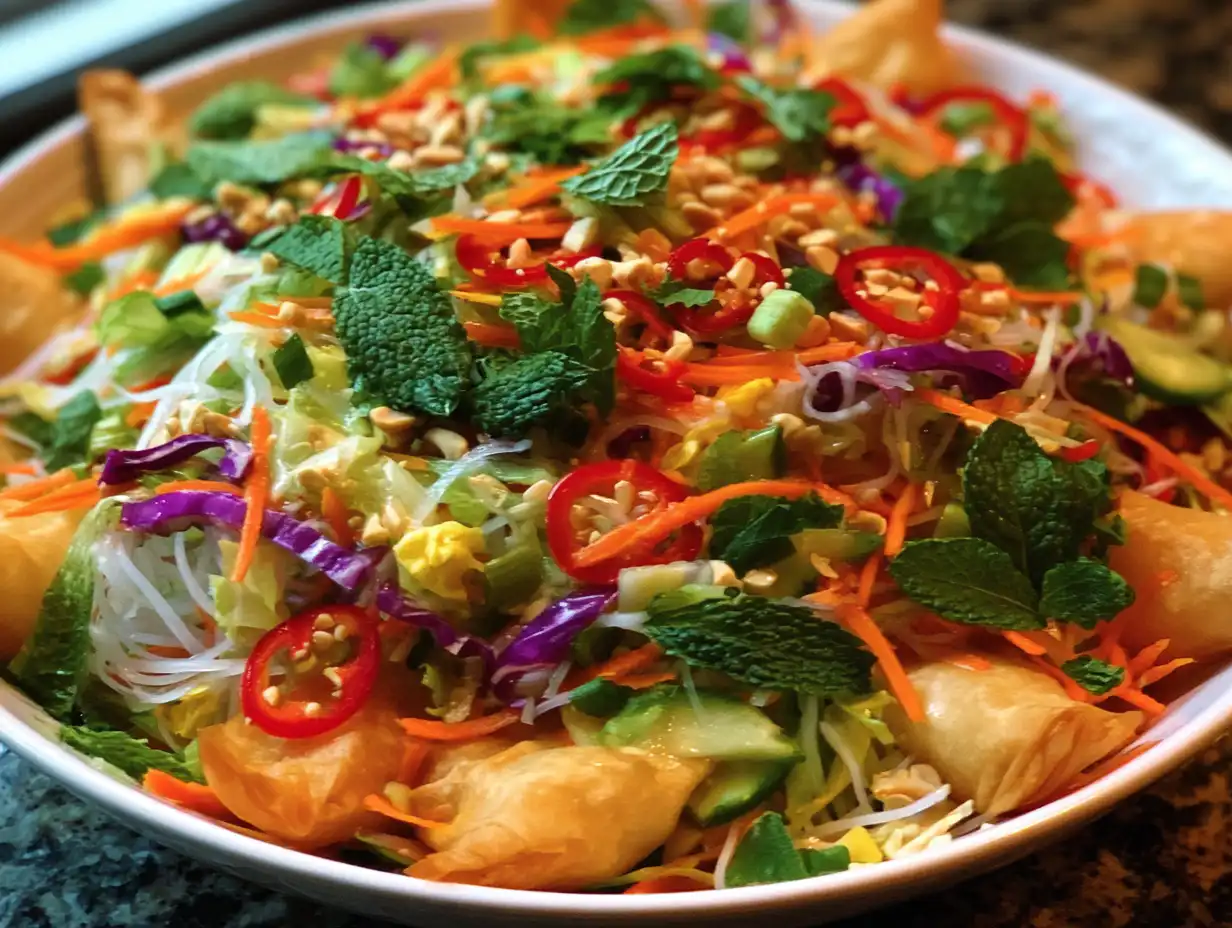
There’s something irresistibly fresh about spring rolls the crunch of raw vegetables, the brightness of herbs, and that bold, zesty dipping sauce. This Spring Roll Salad with Spicy Ginger Dressing captures everything we love about classic spring rolls, but transforms it into an easy, satisfying bowl you can enjoy any night of the week.
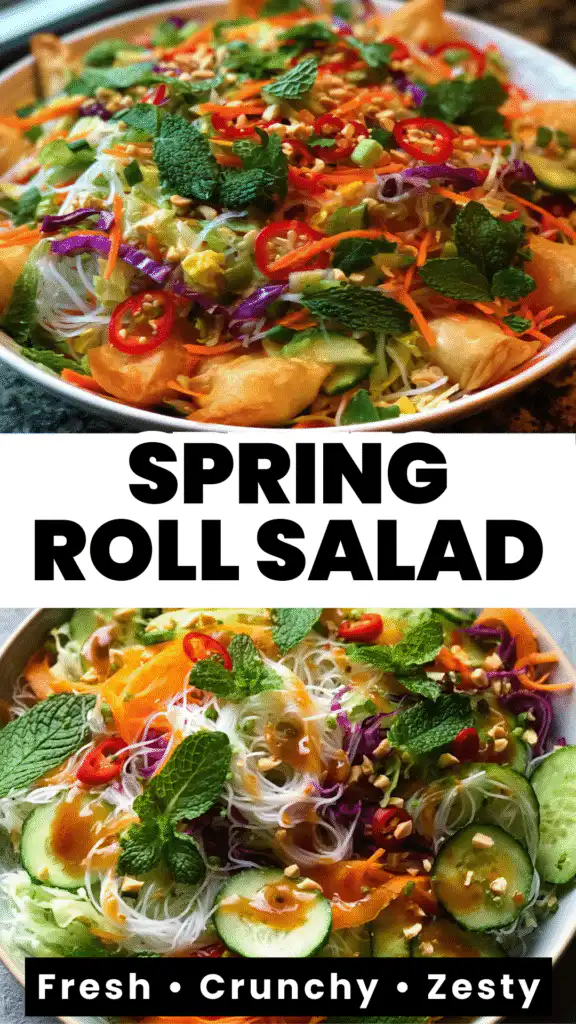
I created this recipe for those moments when you crave something light but still exciting. No wrapping, no soaking rice paper just crisp vegetables, fragrant herbs, and a punchy ginger dressing that wakes up every bite. It’s refreshing enough for warm days, yet filling enough to work as a complete lunch or dinner.
If you love gluten-free, veggie-forward meals that don’t sacrifice flavor, this salad is about to become a favorite.
Why This Spring Roll Salad Works So Well
- All the flavors of spring rolls without the prep
- Bright, crunchy texture in every bite
- Naturally gluten free
- Customizable with your favorite protein
- Perfect for lunch, dinner, or meal prep
This is the kind of recipe that feels fresh, modern, and deeply satisfying.
Ingredients for Spring Roll Salad with Spicy Ginger Dressing
Salad base
- Shredded romaine or napa cabbage
- Carrots, julienned
- Cucumber, thinly sliced
- Red bell pepper, thinly sliced
- Bean sprouts
- Fresh mint leaves
- Fresh cilantro
- Green onions
Optional protein additions
- Grilled shrimp
- Baked or pan-seared tofu
- Grilled chicken breast
Crunchy toppings
- Crushed peanuts or cashews
- Sesame seeds
Spicy ginger dressing
- Fresh ginger, grated
- Garlic, minced
- Rice vinegar
- Lime juice
- Soy sauce or tamari (gluten free)
- Honey or maple syrup
- Sesame oil
- Chili paste or sriracha
Chef André’s substitutions
- Use red cabbage for extra crunch
- Swap peanuts for sunflower seeds
- Use coconut aminos instead of soy sauce
- Add avocado for creaminess
Step-by-Step Preparation – Guided by Chef André
Preparing the vegetables
Wash and dry all vegetables thoroughly. Slice them thinly and evenly — this is key to getting that classic spring roll texture in every bite.
Making the spicy ginger dressing
Whisk together ginger, garlic, rice vinegar, lime juice, soy sauce, honey, sesame oil, and chili paste until smooth and balanced. Taste and adjust heat or sweetness as needed.
Cooking the protein (optional)
If adding shrimp, chicken, or tofu, cook it simply with a little oil and salt. Let it cool slightly before adding to the salad.
Assembling the salad
In a large bowl, combine greens, vegetables, herbs, and protein. Drizzle with dressing and toss gently to coat. Finish with nuts and sesame seeds.
Chef André’s Creative Variations
- Extra spicy: Add chili oil or extra sriracha
- Thai-inspired: Add basil and a splash of coconut milk to the dressing
- Low-carb: Skip sweetener and add more herbs
- Protein-packed: Combine shrimp and tofu for variety
Chef’s Tips for the Best Spring Roll Salad
- Keep vegetables cold for maximum crunch
- Add dressing just before serving
- Use fresh herbs generously
- Serve immediately for best texture
What to Serve with Spring Roll Salad
- As a light main dish
- With soup for a balanced dinner
- Alongside grilled meats
- Packed for lunch (keep dressing separate)
It’s versatile, refreshing, and always a hit.
Storage and Meal Prep
- Store vegetables up to 2 days refrigerated
- Keep dressing in a sealed jar up to 4 days
- Store protein separately
- Assemble just before eating
FAQ – Spring Roll Salad with Spicy Ginger Dressing
Is this salad good for meal prep?
Yes, if you keep components separate.
Can I make it vegan?
Absolutely — use tofu or enjoy it veggie-only.
Is it very spicy?
The heat is adjustable to your taste.
Approximate Nutrition (per serving)
- Calories: ~380
- Protein: ~18g (with protein)
- Carbs: ~34g
- Fat: ~20g
Conclusion – From Chef André
This Spring Roll Salad with Spicy Ginger Dressing is everything I love about fresh cooking — vibrant, crunchy, and full of personality. It’s proof that healthy food can be exciting, bold, and deeply satisfying.
If you try it, tell me what protein you chose. And for safe handling of fresh produce and leftovers, always refer to USDA Food Safety guidelines:
👉 https://www.fsis.usda.gov/food-safety