
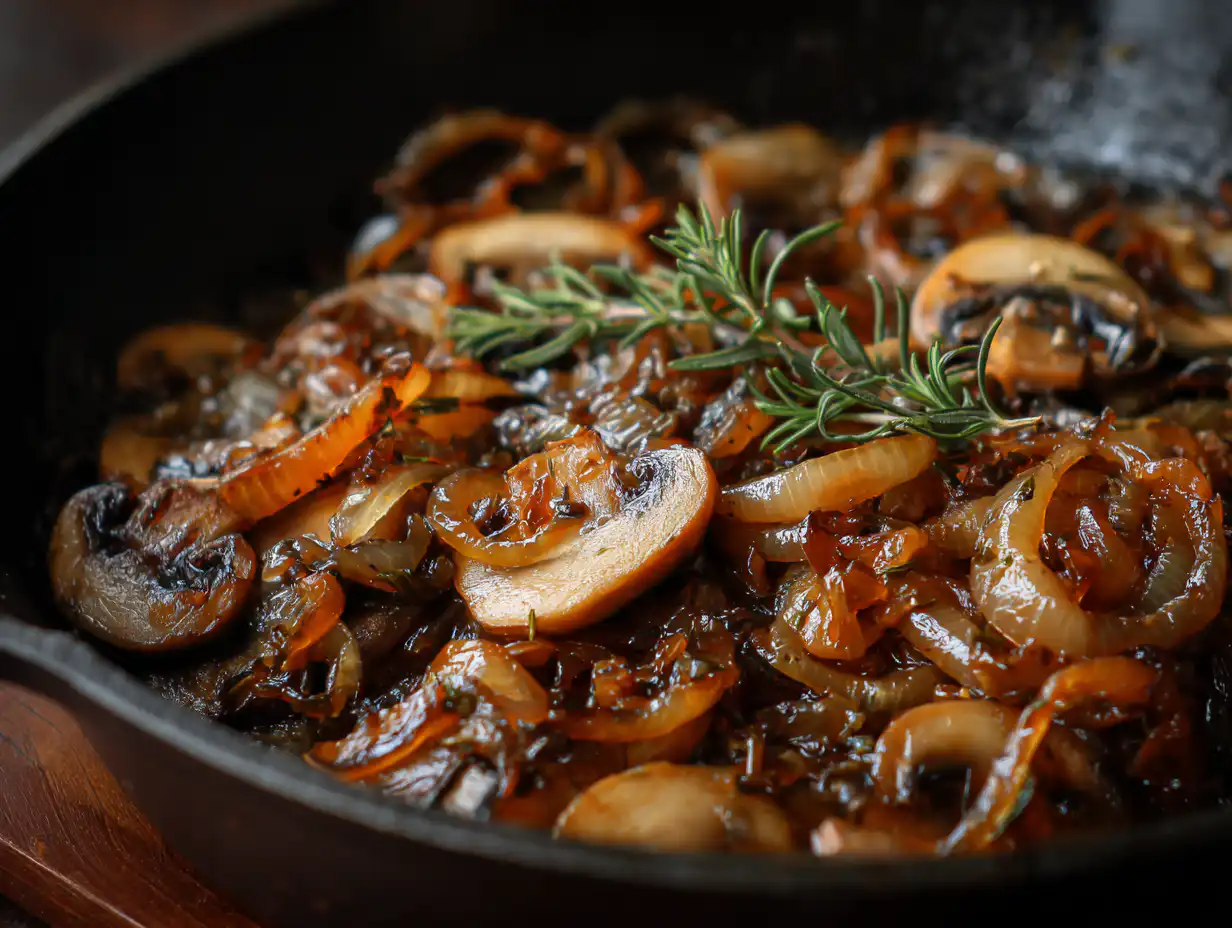
Some side dishes don’t just sit on the plate they elevate the entire meal. These Caramelized Onions and Mushrooms are one of those quiet heroes that turn a simple steak or burger into something truly special. Deeply savory, slightly sweet, and rich with umami, this recipe proves that humble ingredients can deliver big results.
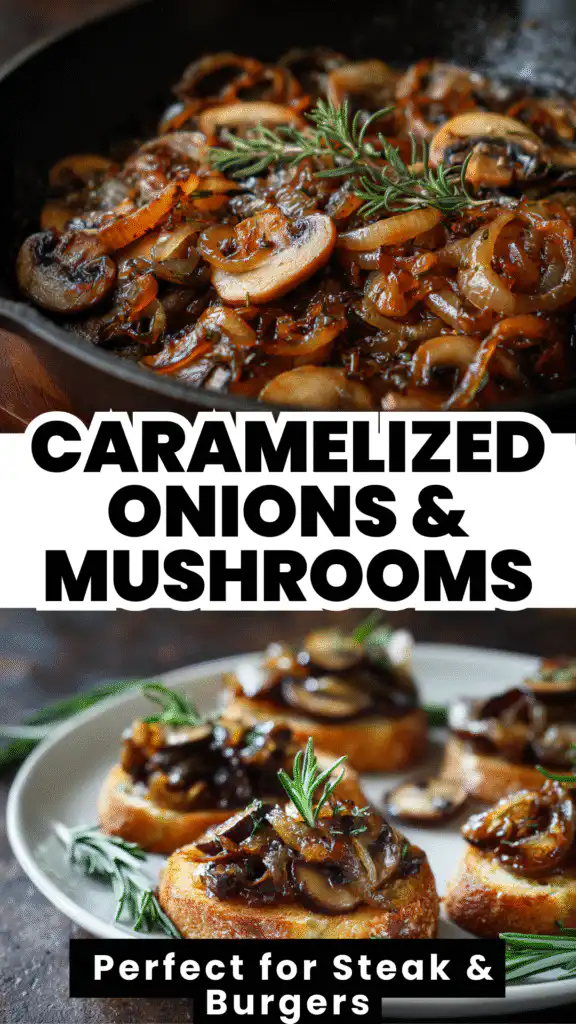
I’ve made this dish more times than I can count. It’s my go-to when I want to add depth without overcomplicating dinner. A hot skillet, sliced onions, earthy mushrooms, and a little patience are all it takes. As they slowly cook, the onions become golden and sweet, while the mushrooms release their juices and soak up every bit of flavor.
Whether you’re topping a grilled steak, stacking a burger, or serving it as a side dish, this mushroom and onion topping belongs in every home cook’s repertoire.
Why Caramelized Onions and Mushrooms Are So Irresistible
- Rich, savory flavor with natural sweetness
- Simple ingredients, big payoff
- Pairs perfectly with steak, burgers, or chicken
- One-skillet recipe with minimal cleanup
- Easy to make ahead and reheat
This is the kind of recipe that quietly steals the show.
Ingredients for Caramelized Onions and Mushrooms
Main ingredients
- Yellow or sweet onions, thinly sliced
- Mushrooms (cremini, white, or portobello), sliced
- Olive oil
- Butter
Seasonings
- Salt
- Black pepper
- Garlic, minced or grated
Optional flavor boosters
- Fresh thyme or rosemary
- Balsamic vinegar
- Worcestershire sauce
- Soy sauce or tamari (for umami depth)
Chef André’s substitutions
- Use avocado oil instead of olive oil
- Swap butter for dairy-free butter
- Add shallots for extra sweetness
- Mix mushroom varieties for deeper flavor
Step-by-Step Preparation – Guided by Chef André
Prepping the vegetables
Slice onions evenly and clean mushrooms with a damp towel. Uniform slicing ensures even cooking and better caramelization.
Cooking the onions
Heat olive oil and butter in a wide skillet over medium heat. Add onions with a pinch of salt and cook slowly, stirring occasionally, until soft and golden. This step takes patience — low and slow is key.
Adding the mushrooms
Once onions are caramelized, add mushrooms to the pan. Increase heat slightly and let them cook undisturbed at first so they brown properly.
Seasoning and finishing
Stir in garlic and herbs, cooking just until fragrant. Finish with black pepper and any optional flavor boosters like balsamic vinegar.
Chef André’s Creative Variations
- Steakhouse style: Add Worcestershire sauce and thyme
- Burger topping: Melt cheese directly over the mixture
- Vegan umami: Add tamari and nutritional yeast
- Sweet-savory twist: Finish with balsamic glaze
Chef’s Tips for Perfect Caramelization
- Don’t rush the onions
- Use a wide skillet to avoid steaming
- Salt lightly at first, adjust later
- Let mushrooms brown before stirring
These small details make a big difference.
How to Use Caramelized Onions and Mushrooms
- Spoon over grilled steak
- Pile onto burgers or sandwiches
- Serve alongside roasted chicken
- Mix into omelets or pasta
- Use as a pizza topping
It’s one of those recipes that fits almost anywhere.
Make-Ahead, Storage & Reheating
- Store in an airtight container up to 4 days
- Reheat gently in a skillet
- Add a splash of water or butter if needed
- Flavor deepens over time — great for meal prep
FAQ – Caramelized Onions and Mushrooms
How long does caramelizing onions take?
About 25–30 minutes for deep flavor.
Can I make this without butter?
Yes, olive oil works well on its own.
What mushrooms work best?
Cremini or portobello give the richest flavor.
Approximate Nutrition (per serving)
- Calories: ~120
- Carbs: ~12g
- Fat: ~8g
- Protein: ~3g
Conclusion – From Chef André
These Caramelized Onions and Mushrooms are proof that simple cooking techniques can transform everyday meals. Once you master this recipe, you’ll find yourself making it again and again — not because you need to, but because you want to.
If you try it, let me know what you served it with. And for safe storage and handling tips for cooked vegetables, always check USDA Food Safety guidelines:
👉 https://www.fsis.usda.gov/food-safety