
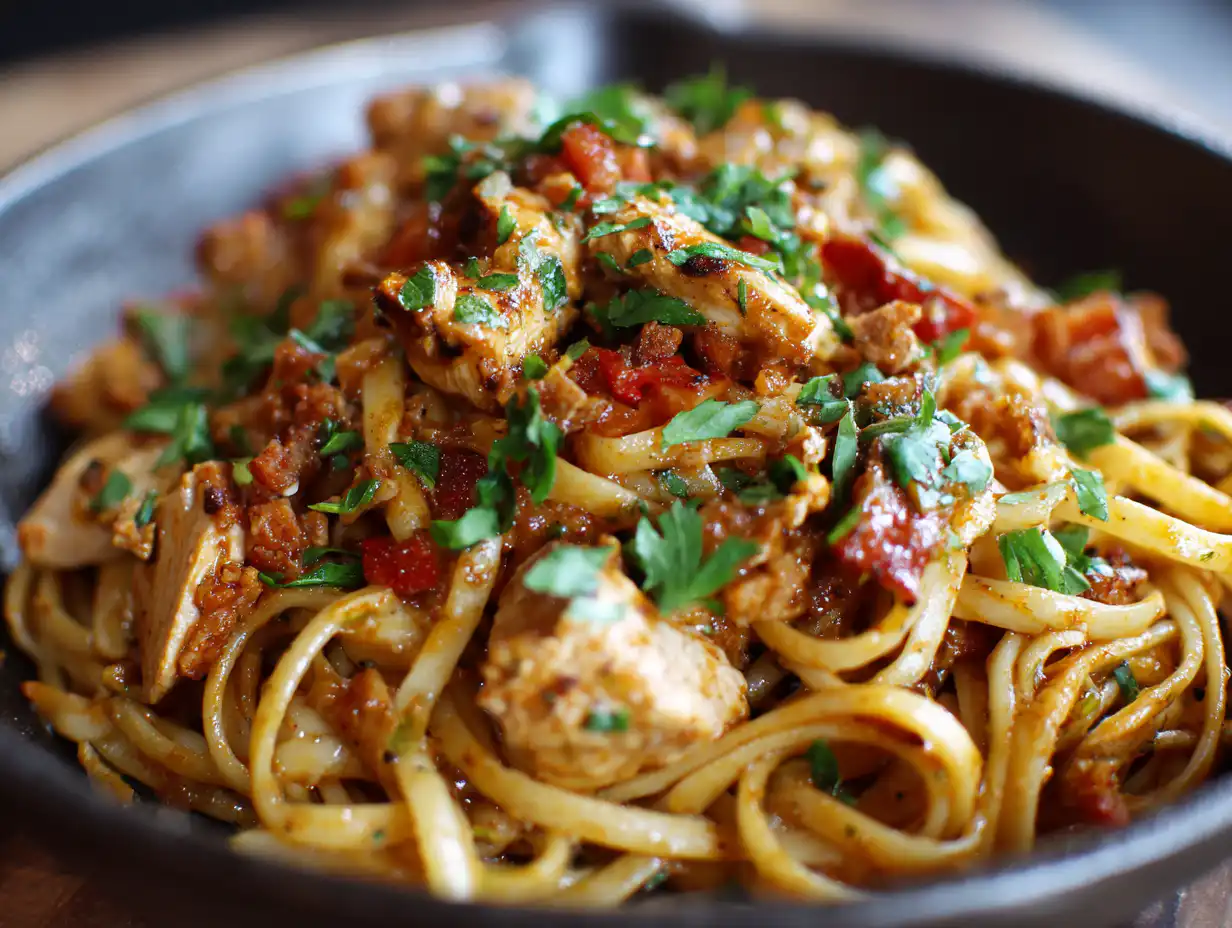
Some recipes are born from pure comfort cravings. Chef James remembers experimenting with bold steakhouse flavors one evening garlic butter, fresh herbs, lemon, and a touch of heat. Those flavors, often called “cowboy butter,” inspired a rich pasta dish that quickly became a favorite in his kitchen: Cowboy Butter Chicken Linguine.
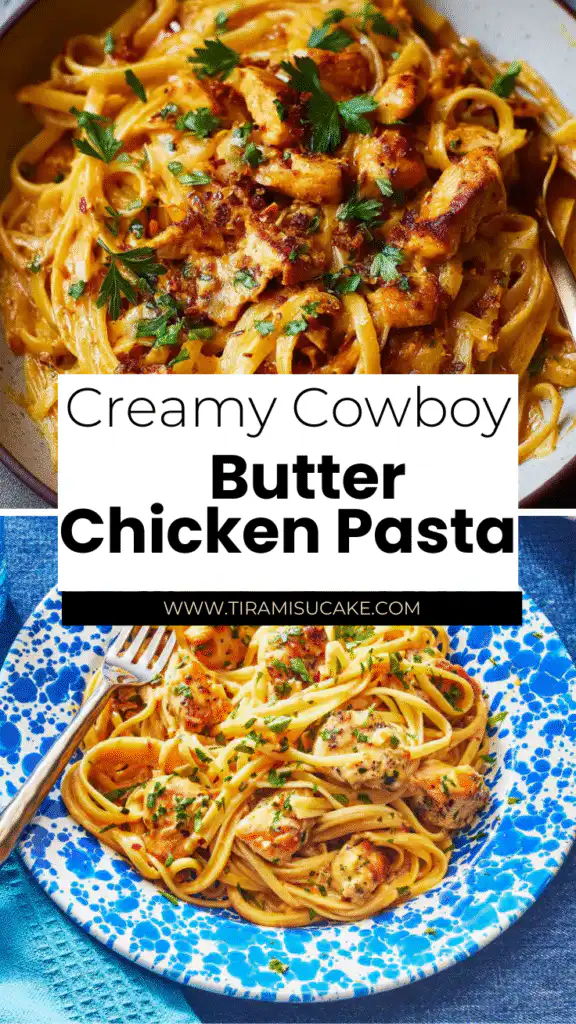
Developed by Chef James, this recipe transforms classic cowboy butter into a silky pasta sauce that coats tender chicken and perfectly cooked linguine. The sauce blends garlic, butter, lemon, Dijon mustard, herbs, and a hint of spice to create a bold flavor that feels both rustic and indulgent.
What makes Cowboy Butter Chicken Linguine special is its balance. It’s buttery yet bright, rich yet fresh. Whether served for a cozy family dinner or a casual weekend meal with friends, this pasta dish delivers restaurant-style flavor with surprisingly simple preparation.
Why Everyone Loves Cowboy Butter Chicken Linguine
The magic of Cowboy Butter Chicken Linguine lies in its bold, layered flavor profile. Cowboy butter traditionally combines melted butter with garlic, lemon, mustard, herbs, and spices ingredients that create a sauce bursting with savory depth.
When paired with pasta and tender chicken, the result is irresistible. The linguine absorbs the rich butter sauce while the chicken adds hearty protein, making the dish satisfying but not overly heavy.
Another reason people love Cowboy Butter Chicken Linguine is its versatility. It works equally well as a weeknight dinner or an impressive meal for guests. The vibrant herbs and glossy sauce also give it that restaurant-style appearance perfect for sharing.
Most importantly, the recipe delivers big flavor with minimal effort — something every home cook appreciates.
Ingredients & Technique
Ingredients
Chicken
- 2 boneless chicken breasts
- 1 tablespoon olive oil
- ½ teaspoon salt
- ½ teaspoon black pepper
- ½ teaspoon smoked paprika
Linguine Pasta
- 12 oz linguine
- Salted water for boiling
Cowboy Butter Sauce
- 6 tablespoons unsalted butter
- 4 cloves garlic, minced
- 1 tablespoon Dijon mustard
- 1 tablespoon lemon juice
- 1 teaspoon lemon zest
- ½ teaspoon crushed red pepper flakes
- 1 tablespoon fresh parsley, chopped
- 1 teaspoon fresh thyme
- ¼ cup grated parmesan cheese
Garnish
- Fresh parsley
- Extra parmesan cheese
- Lemon wedges
👉 For food safety when cooking poultry, refer to FSIS guidelines.
Technique Tip
The secret to a silky Cowboy Butter Chicken Linguine sauce is emulsifying butter with pasta water. Adding a small splash of the starchy pasta water while stirring the butter sauce helps create a smooth, glossy coating that clings beautifully to the linguine.
Professional cooking resources like Serious Eats often highlight this technique for achieving restaurant-quality pasta sauces without heavy cream.
How to Make Cowboy Butter Chicken Linguine
Cook the Pasta
- Bring a large pot of salted water to a boil.
- Cook linguine according to package instructions until al dente.
- Reserve ½ cup pasta water before draining.
Cook the Chicken
- Season chicken breasts with salt, pepper, and smoked paprika.
- Heat olive oil in a skillet over medium heat.
- Cook chicken for about 6–7 minutes per side until golden and cooked through.
- Remove from pan and slice into strips.
Prepare Cowboy Butter Sauce
- In the same skillet, melt butter over medium heat.
- Add minced garlic and sauté for about 30 seconds until fragrant.
- Stir in Dijon mustard, lemon juice, lemon zest, and red pepper flakes.
- Add a splash of reserved pasta water and whisk gently.
Combine Pasta and Chicken
- Add cooked linguine to the skillet and toss to coat with sauce.
- Stir in parmesan cheese and fresh herbs.
- Add sliced chicken on top and mix lightly.
For a presentation style inspired by comforting pasta dishes often featured on Food Network, finish with extra parmesan, fresh parsley, and a squeeze of lemon.
Creative Variations
One reason Cowboy Butter Chicken Linguine has become so popular is how easily the recipe can be customized.
Shrimp Cowboy Butter Linguine
Replace chicken with sautéed shrimp for a seafood version.
Spicy Cowboy Butter Pasta
Add extra red pepper flakes or a dash of hot sauce.
Creamy Cowboy Butter Linguine
Stir in a splash of heavy cream for a richer sauce.
Vegetable Cowboy Butter Pasta
Add roasted mushrooms, asparagus, or spinach.
Steakhouse Version
Use sliced steak instead of chicken for a heartier variation.
Each variation keeps the bold flavor that defines Cowboy Butter Chicken Linguine while adding a unique twist.
Storage & Make-Ahead Tips
Refrigerator Storage
Store leftovers in an airtight container for up to 3 days.
Reheating
Warm gently in a skillet with a splash of water or broth to loosen the sauce.
Make-Ahead Tip
Prepare the cowboy butter sauce ahead of time and refrigerate it. Reheat gently before tossing with pasta.
Professional cooking resources like King Arthur Baking often emphasize reheating pasta sauces slowly to maintain smooth texture.
FAQs
What is cowboy butter?
Cowboy butter is a flavorful garlic butter sauce made with herbs, mustard, lemon, and spices.
Can I use another pasta shape?
Yes. Fettuccine, spaghetti, or penne work well.
How do I make the dish less spicy?
Simply reduce or omit the red pepper flakes.
Can I use rotisserie chicken?
Absolutely. Shredded rotisserie chicken works great for a faster version.
Can I make this dish ahead of time?
It’s best served fresh, but the components can be prepared ahead and combined before serving.
Conclusion
Bold, buttery, and full of vibrant flavor, Cowboy Butter Chicken Linguine is a pasta dish that brings steakhouse-style richness into a simple home-cooked meal. The combination of garlic butter, herbs, lemon, and tender chicken creates a sauce that coats every strand of linguine beautifully.
Created by Chef James, this recipe shows how a few powerful ingredients can transform everyday pasta into something truly special. Whether you’re cooking for family or entertaining friends, Cowboy Butter Chicken Linguine delivers comfort, flavor, and a little rustic flair in every bite.
For additional culinary resources and cooking guidance, explore: