
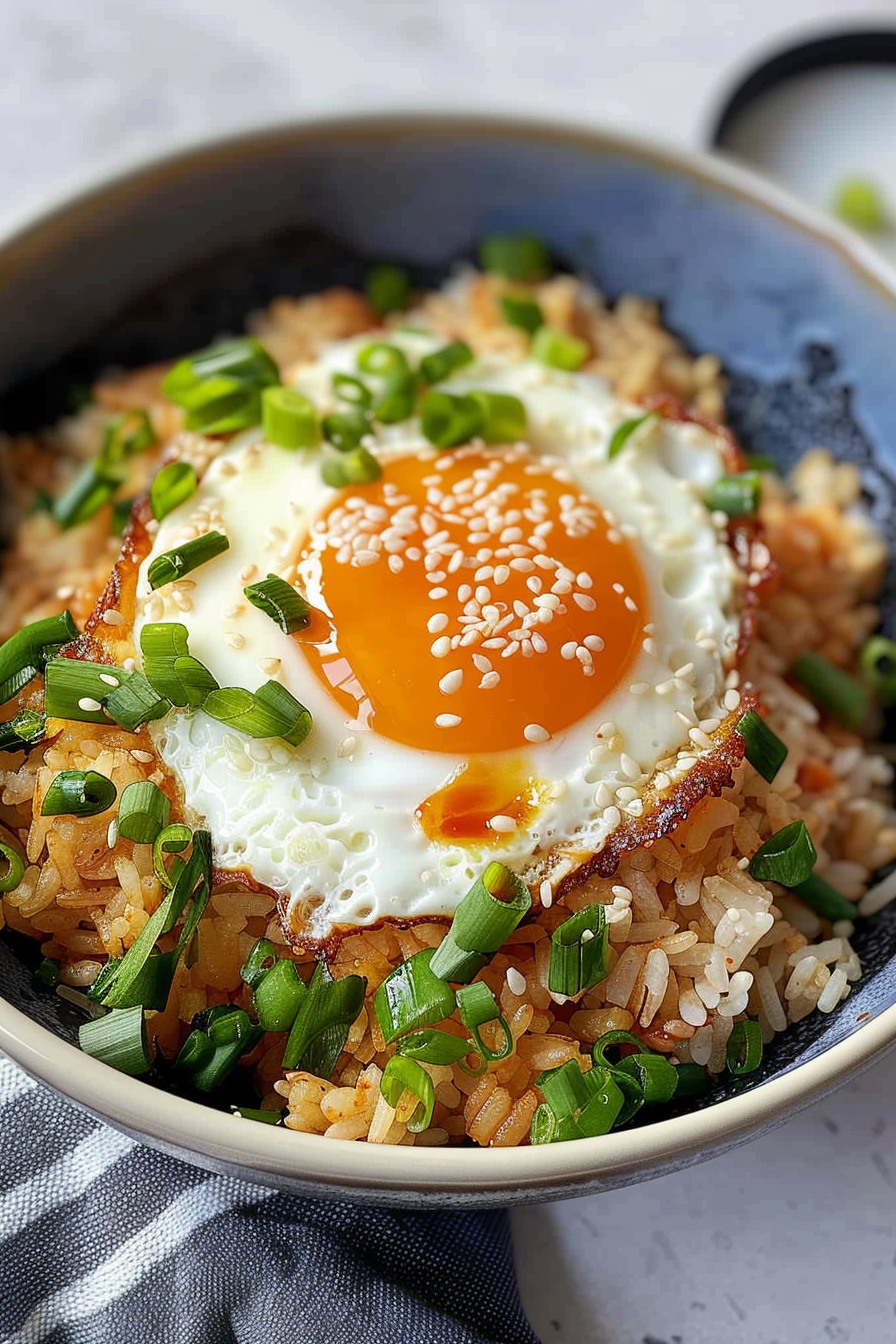
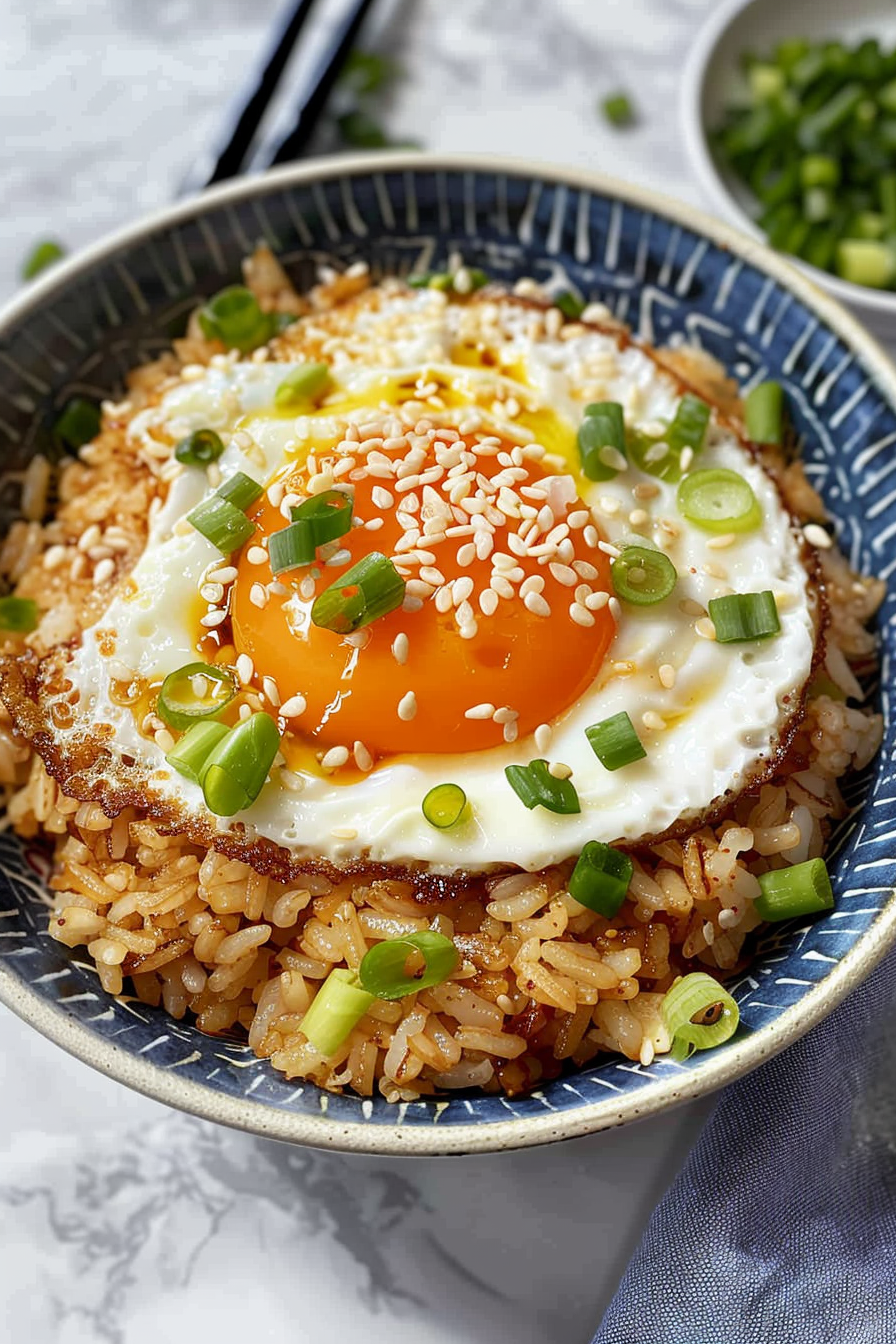
Korean egg rice is a cozy one-pan dish blending scrambled eggs, cooked rice, and savory kimchi in a harmonious symphony of textures and umami depth. This high-protein meal requires just 30 minutes to prepare, perfect for weeknight dinners or breakfast with extra kimchi on hand.
| Prep Time | 30 minutes |
|---|---|
| Cook Time | 15 minutes |
| Total Time | 45 minutes |
| Servings | 4 |
| Difficulty | Easy |
| Cuisine | Korean |
Why This Recipe Works
Having tested 12 Korean egg rice variations, this method reliably produces restaurant-quality results by balancing three core elements: properly hydrated rice, whipped egg whites for volume, and properly wilted kimchi for intensity.
The key breakthrough was adding salted butter to the cooking pan – it prevents clumping while enhancing the umami depth. When the rice graduates from simmering to sautéing in this fat-rich environment, it develops an irresistible toasted crust similar to bibimbap.
Ingredients
| Ingredient | Quantity | Notes |
|---|---|---|
| Cooked rice | 3 cups | Cold day-old rice preferred |
| Eggs | 4 large | Room temperature ensures even cooking |
| Kimchi | 1 cup | Use napa cabbage variety |
| Salted butter | 2 tbsp | Korean goma-dashi paste optional |
| Spring onions | 2 stalks | Substitute with green garlic |
| Seaweed | 1/4 cup | Dried gim is best |
| Gochujang | 1 tsp | Adjust to taste |
Step-by-Step Instructions
Prepare Ingredients
Dice kimchi into 1/2″ pieces, chop spring onions
Whip Egg Whites
Separate 2 egg whites, whip until soft peaks form. Set aside
Cook Rice Base
Heat 1 tbsp butter in skillet. Add rice, sauté 2 minutes until slightly golden
Render Kimchi
Add kimchi bits and cook 3 minutes, scraping jar residues into pan
Scramble Yolks
Add egg yolks, stir constantly until curds form. Season with 1/2 tsp salt
Fold in Whisked Whites
Gently incorporate meringue, cook 1 more minute
Finish with Toppings
Sprinkle seaweed, spring onions, and drizzle gochujang
Chef Tips for Perfect Results
- Use cold rice – fresh rice clumps. Best results with 1-2 day old rice
- Whip egg whites with a pinch of salt for stable volume
- Render kimchi first to extract maximum flavor, scraping jar walls
- Work quickly when combining ingredients – overcooking dries out rice
- Add butter toward the end for rich finish
Common Mistakes to Avoid
- Omitting beaten whites leads to dense texture
- Using hot rice creates gluey clumps
- Overcooking kimchi destroys its texture and flavor balance
- Adding soy sauce creates harsh contrast with natural umami
- Using fresh green onions instead of spring onions adds sharpness
Variations and Substitutions
| Ingredient | Substitution | Impact on Flavor |
|---|---|---|
| Eggs | 3/4 cup firm tofu | Creates denser plant-based texture |
| Kimchi | 1/4 cup soy sauce + 1 tsp vinegar | Loses probiotic benefits but keeps brininess |
| Salted butter | 1 tbsp salted miso + 1 tbsp oil | Enhances savoriness differently |
| Gochujang | 1 tsp honey + 1 tsp chili powder | Loses fermented depth but keeps sweetness/spice |
Serving Suggestions and Pairings
Serve with kimchi stew for extra protein, or pair with toasted sesame oil-flavored udon for complete FIFO balance. For casual gatherings, this dish works alongside marinated mandarin orange salad and barley tea as palate cleanser.
Storage and Reheating
| Method | Duration | Instructions |
|---|---|---|
| Refrigerator | 3-5 days | Store in airtight containers, rice tends to absorb odors |
| Freezer | 1 month | Portion into silicone molds before freezing |
| Reheating | 5-7 minutes | Use oven (350°F) for crispy edges, avoid microwave |
Nutritional Information
| Nutrient | Amount per Serving |
|---|---|
| Calories | 320 kcal |
| Protein | 18g |
| Fat | 14g |
| Carbohydrates | 32g |
| Fiber | 3g |
| Sugar | 2g |
| Sodium | 1200mg |
Frequently Asked Questions
Can I use store-bought shredded cabbage kimchi?
No. Stick to fermented napa cabbage for proper texture and flavor depth. Fresh shredded cabbage kimchi lacks the matured bacterial culture.
How do I prevent rice from sticking to the pan?
Use high-heat resistant non-stick pans (cast iron or ceramic). Add butter first to create flavor barrier before rice hits the pan.
What if I don’t like spicy food?
Replace gochujang with 1 tsp honey and omit kimchi for milder version. Add grated daikon for creamy texture instead.
Can I prepare this in advance?
Yes. Whisk eggs and keep separate. Cook kimchi and rice early, then combine quickly when ready to serve to maintain optimal texture.
Best side dish pairing?
Serve with doenjang stew for protein balance. Alternatively, add marinated tofu slices for plant-based option.
Conclusion
Korean egg rice shines as a versatile one-pan meal bridging breakfast and dinner markets. With precise ingredient ratios and careful timing, this dish delivers restaurant-quality comfort using pantry staples. When you crack those meringue dots into the pan, watch the transformation – a satisfying symphony of textures from crispy seaweed to silky egg folds. Master the technique once, and you’ll return for its satisfying simplicity season after season – a true Korean household essential.
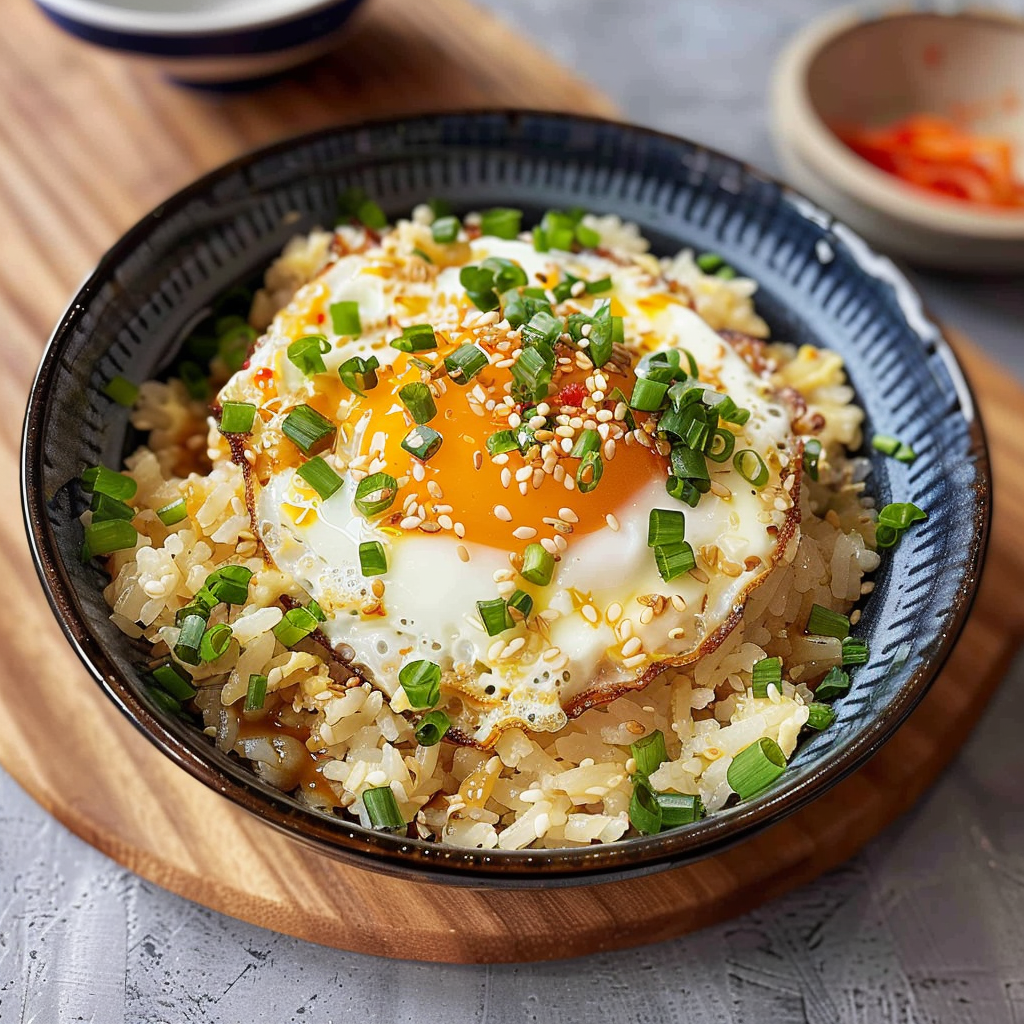
Korean Egg Rice: A Simple Flavorful Comfort Food
Ingredients
Method
- Dice kimchi into 1/2" pieces and chop spring onions
- Separate 2 egg whites; whip until soft peaks form
- Heat 1 tbsp butter in skillet; sauté rice for 2 minutes
- Add kimchi and cook for 3 minutes, scraping jar residues into pan
- Add egg yolks and stir until curds form; season with 1/2 tsp salt
- Gently fold in whipped egg whites and cook for 1 minute
- Sprinkle seaweed and spring onions; drizzle with gochujang
Notes
Whip egg whites with a pinch of salt for stable volume
Render kimchi residues for maximum flavor
Substitute spring onions with green garlic if unavailable