
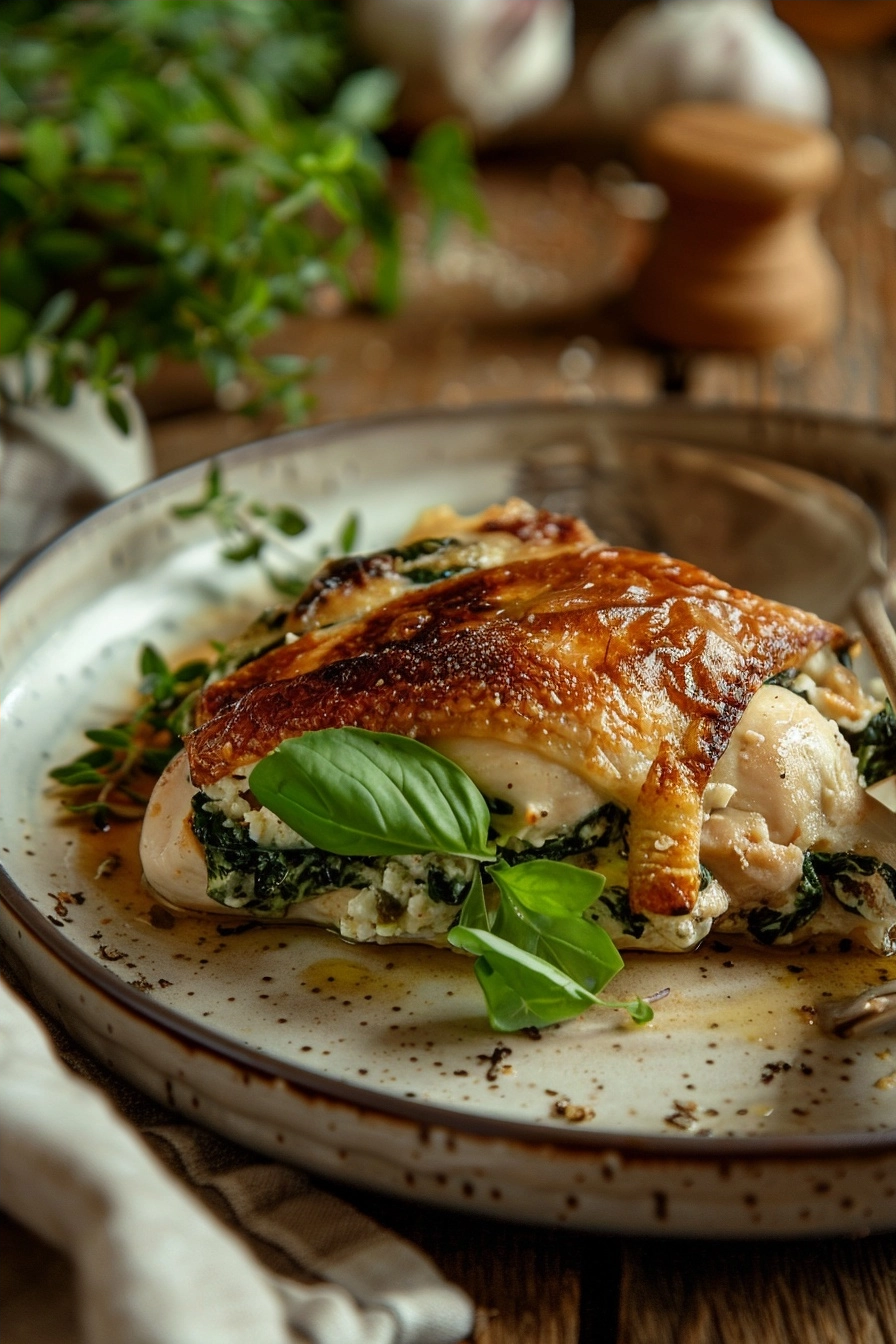
Spinach stuffed chicken breast is a culinary triumph offering a delightful blend of savory chicken and a rich, herbaceous filling. This dish elevates simple ingredients into an impressive meal without demanding extensive culinary expertise. It is a visually appealing and exceptionally satisfying entree, perfect for weeknight dinners or elegant gatherings. The combination of tender chicken, creamy spinach, and aromatic seasonings creates a memorable dining experience.
Why This Recipe Works
From my kitchen to yours, this spinach stuffed chicken breast recipe consistently delivers fantastic results. The secret lies in balancing the delicate texture of the chicken with a powerfully flavored filling. Butterflying the chicken breast ensures even cooking, preventing dry edges while the center remains moist. This technique also creates the perfect pocket for the creamy spinach and cheese mixture. I find that the initial sear in the skillet before baking locks in the juices, contributing to a more succulent final product. The simple yet effective seasonings enhance the natural flavors without overpowering the main ingredients.
The choice of ingredients is crucial for the success of this dish. Softened cream cheese provides a luxurious creaminess that binds the spinach and Parmesan together beautifully. Fresh garlic and Italian seasoning add aromatic depth, transforming an ordinary chicken breast into something truly special. Ensuring minimal liquid in the spinach after wilting is key to a filling that isn’t watery. This recipe is designed for maximum flavor with straightforward steps, making it an accessible yet impressive option for home cooks of all levels. It’s a reliable go-to that always impresses.
Ingredients
| Ingredient | Quantity | Notes |
|---|---|---|
| Boneless, skinless chicken breasts | 4 (about 6-8 oz each) | Choose uniform sizes for even cooking. |
| Fresh spinach | 5 oz (about 5 cups, packed) | Baby spinach wilts quickly and is tender. |
| Cream cheese | 4 oz | Softened to room temperature for easy mixing. Use full-fat for best texture. |
| Garlic | 2 cloves | Minced. Adjust to your preference. |
| Parmesan cheese | 1/4 cup | Finely grated. Adds a salty, umami flavor. |
| Italian seasoning | 1 teaspoon | A blend of herbs like oregano, basil, and thyme. |
| Salt | 1/2 teaspoon, plus more for seasoning | Adjust to taste. |
| Black pepper | 1/4 teaspoon, plus more for seasoning | Freshly ground is recommended. |
| Olive oil | 2 tablespoons | For sautéing and searing. Extra virgin is fine. |
| Toothpicks | 4-6 | To secure the chicken breasts. |
Step-by-Step Instructions
- Preheat your oven to 400°F (200°C).
- Heat 1 tablespoon of olive oil in a skillet over medium heat.
- Add minced garlic and sauté for about 30 seconds until fragrant.
- Add fresh spinach to the skillet, a handful at a time, allowing it to wilt.
- Cook until all spinach is wilted, about 3-5 minutes.
- Transfer the wilted spinach to a fine-mesh sieve and press firmly to remove as much excess liquid as possible. This step is crucial for a non-watery filling.
- In a medium bowl, combine the drained spinach, softened cream cheese, grated Parmesan cheese, Italian seasoning, 1/2 teaspoon salt, and 1/4 teaspoon black pepper.
- Mix thoroughly until all ingredients are well incorporated and a creamy filling forms.
- Place chicken breasts on a clean cutting board.
- Carefully butterfly each chicken breast by slicing horizontally with a sharp knife, starting about 1 inch from the thickest side and cutting almost all the way through, creating a pocket. Do not cut all the way across.
- Open the chicken breast like a book.
- Season the inside and outside of each chicken breast lightly with salt and pepper.
- Evenly distribute the spinach filling into the pocket of each chicken breast.
- Carefully fold the chicken breast back over the filling.
- Secure the opening of each stuffed chicken breast with 2-3 toothpicks to keep the filling contained during cooking.
- Heat the remaining 1 tablespoon of olive oil in an oven-safe skillet over medium-high heat.
- Carefully place the stuffed chicken breasts into the hot skillet, presentation side down.
- Sear for 2-3 minutes per side until golden brown. This enhances flavor and appearance.
- Transfer the oven-safe skillet directly into the preheated oven.
- Bake for 20-25 minutes.
- The chicken is done when it reaches an internal temperature of 165°F (74°C) on a meat thermometer inserted into the thickest part of the chicken, avoiding the filling.
- Remove the skillet from the oven.
- Let the chicken rest in the skillet for 5-10 minutes before serving. This allows the juices to redistribute, ensuring a moist chicken breast.
- Remove and discard toothpicks before slicing and serving.
Phase 1: Preparing the Filling
Phase 2: Stuffing and Securing the Chicken
Phase 3: Cooking the Stuffed Chicken
Chef Tips for Perfect Results
- Ensure the spinach is thoroughly drained. Excess moisture will lead to a watery filling and can make the chicken soggy. Squeeze out as much liquid as possible.
- Use softened cream cheese. Room temperature cream cheese blends seamlessly into the filling, creating a smoother, more consistent texture.
- Don’t overcrowd the skillet when searing. Sear chicken in batches if necessary to achieve a beautiful golden-brown crust on all sides.
- Butterflying the chicken evenly is key. A consistent thickness ensures the chicken cooks through at the same rate.
- Resting the chicken is non-negotiable. Allowing the meat to rest after cooking is essential for juicy, tender results.
Common Mistakes to Avoid
- Under-draining Spinach: This leads to a watery filling that can seep out and make the exterior of the chicken mushy. Thoroughly squeeze out all liquid after wilting.
- Over-stuffing Chicken: Filling the chicken pockets too full makes them difficult to close and secure, increasing the likelihood of the filling leaking during cooking. Be generous but don’t overfill.
- Skipping the Sear: While baking alone will cook the chicken, searing before baking adds crucial depth of flavor and a more appealing golden-brown exterior. This Maillard reaction is vital for taste.
- Not Using Toothpicks: Toothpicks are simple but highly effective at keeping the filling securely inside the chicken breast. Forgetting them can result in a messy presentation and lost filling.
- Cutting into Chicken Immediately: Cutting into the chicken right after it comes out of the oven allows all the flavorful juices to escape. Always rest the chicken for at least 5-10 minutes.
Variations and Substitutions
| Ingredient | Substitution | Impact on Flavor |
|---|---|---|
| Fresh spinach | Frozen spinach (thawed and thoroughly squeezed dry) | Slightly less vibrant color, similar flavor profile. Ensure all water is removed. |
| Cream cheese | Goat cheese or Neufchâtel cheese | Goat cheese adds a tangy note; Neufchâtel is lighter and less rich. |
| Parmesan cheese | Pecorino Romano cheese or Grana Padano | Adds a sharper, saltier, or milder nutty flavor respectively. |
| Italian seasoning | Mix of dried basil, oregano, and thyme | Provides the same herby notes; adjust proportions to preference. |
| Olive oil | Avocado oil or grapeseed oil | Neutral oils that won’t alter the chicken’s flavor. |
Serving Suggestions and Pairings
Spinach stuffed chicken breast is a versatile main course that pairs beautifully with a variety of side dishes. For a classic Italian-inspired meal, serve alongside roasted asparagus or a simple mixed green salad with a balsamic vinaigrette. Creamy mashed potatoes or fluffy quinoa also make excellent accompaniments, soaking up any delicious juices from the chicken. This dish is ideal for a special family dinner on a Sunday evening or a more formal dinner party. It also works well for a sophisticated lunch if leftovers are available. Consider pairing with a light, crisp beverage like sparkling citrus water. For more in-depth pairing ideas, consult resources on classic chicken dish accompaniments.
Storage and Reheating
| Method | Duration | Instructions |
|---|---|---|
| Refrigerator | 3-4 days | Store cooked chicken in an airtight container. Ensure it has cooled completely before refrigerating. |
| Freezer | 2-3 months | Wrap individual portions tightly in plastic wrap, then aluminum foil or place in freezer bags. Thaw overnight in the refrigerator before reheating. |
| Reheating (Oven) | 10-15 minutes | Place chicken in a baking dish with a splash of broth or water. Cover with foil and reheat at 350°F (175°C) until heated through. |
| Reheating (Microwave) | 1-2 minutes | Place chicken on a microwave-safe plate, cover loosely with a damp paper towel, and reheat in 30-second intervals until warmed through, being careful not to overcook. |
Nutritional Information
Approximate values per serving:
| Nutrient | Amount per Serving |
|---|---|
| Calories | 350 kcal |
| Protein | 40 g |
| Fat | 20 g |
| Saturated Fat | 8 g |
| Carbohydrates | 5 g |
| Fiber | 1 g |
| Sugar | 2 g |
| Sodium | 400 mg |
Frequently Asked Questions
Can I use frozen spinach for the filling?
Yes, frozen spinach can be substituted for fresh. Thaw it completely and squeeze out all excess moisture before mixing it into the filling. This is essential to prevent a watery result.
How do I know if the chicken is cooked through?
The chicken is cooked when a meat thermometer inserted into the thickest part registers 165°F (74°C). Ensure the thermometer does not touch any filling. The juices should also run clear when pierced.
My filling leaked out, what went wrong?
Filling may leak if the chicken was overstuffed, not properly secured with toothpicks, or if the initial cut for the pocket was too close to the edge. Ensure the chicken is closed securely and use enough toothpicks.
Can I prepare the spinach stuffed chicken ahead of time?
You can prepare the filling and stuff the chicken breasts a few hours in advance. Store them covered in the refrigerator until ready to cook. It is best to sear and bake them just before serving for optimal texture.
What herbs can I add to the spinach filling?
Fresh herbs like parsley, chives, or a touch of dill can be added for extra flavor. Dried basil or oregano can also be incorporated alongside the Italian seasoning. A pinch of nutmeg complements spinach very well.
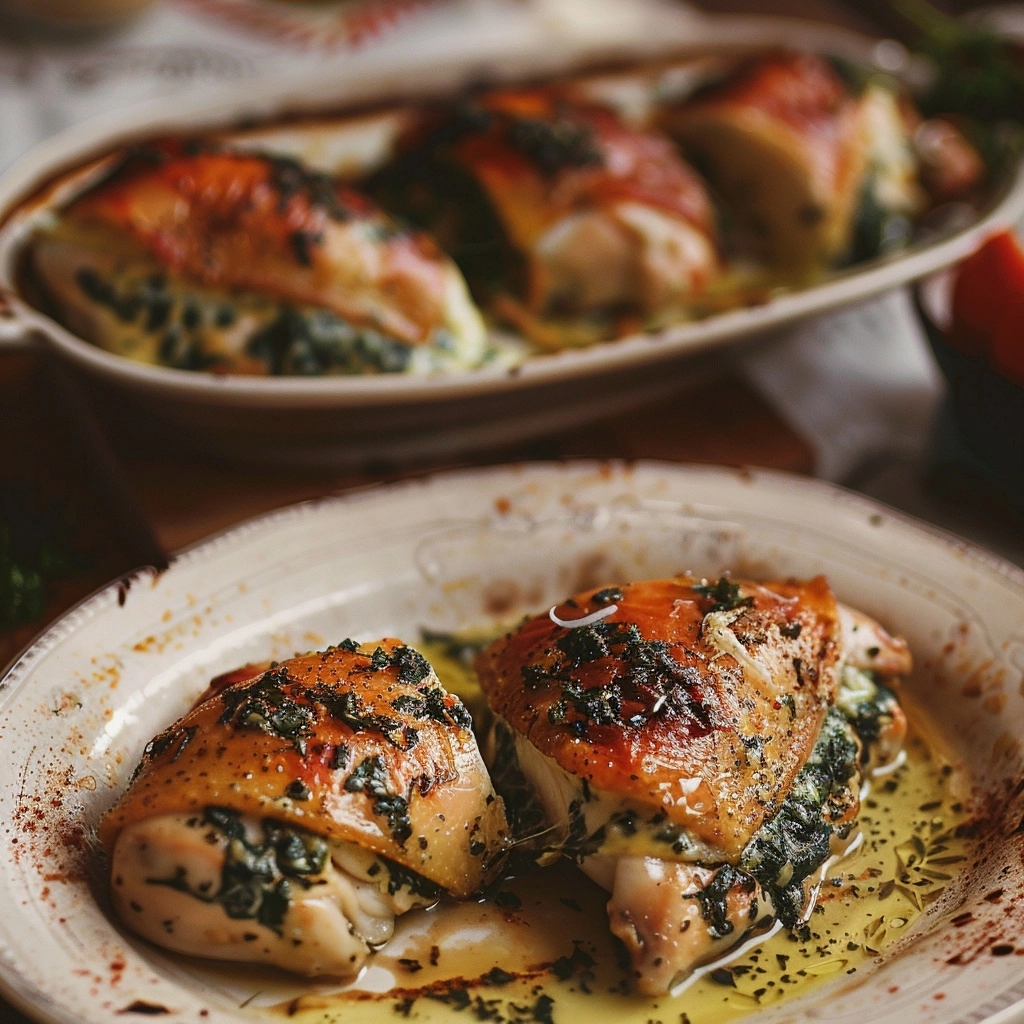
This spinach stuffed chicken breast recipe is a testament to how simple techniques can yield extraordinary results. The rich, creamy spinach filling encased in tender, juicy chicken creates a dish that is both comforting and elegant. Mastering this recipe will undoubtedly add a star player to your culinary repertoire. Enjoy the delightful fusion of flavors and textures that makes this dish a true crowd-pleaser. Happy cooking!
Ingredients
- 4 boneless, skinless chicken breasts (about 6-8 oz each)
- 5 oz fresh spinach (about 5 cups, packed)
- 4 oz cream cheese (softened to room temperature)
- 2 cloves garlic (minced)
- 1/4 cup Parmesan cheese (finely grated)
- 1 teaspoon Italian seasoning
- 1/2 teaspoon salt (plus more for seasoning)
- 1/4 teaspoon black pepper (freshly ground)
- 1 tablespoon olive oil (for searing)
- Optional: pinch of red pepper flakes for heat
Instructions
- Preheat oven to 375°F (190°C). Place a heavy oven-safe skillet on the stove over medium heat. Season chicken breasts with salt and pepper on both sides.
- Using a sharp knife, cut through the chicken breast horizontally to create a pocket, being careful not to cut all the way through. Set aside.
- In a separate bowl, mix softened cream cheese, minced garlic, Parmesan cheese, Italian seasoning, salt, and black pepper until well combined.
- Stir in wilted or fresh spinach into the cream cheese mixture, ensuring any excess moisture is drained to prevent filling from becoming watery.
- Fill the chicken pockets with the spinach and cheese mixture. Gently pat to seal the opening.
- Heat olive oil in the skillet. Sear the stuffed chicken for 2–3 minutes per side until golden brown. Transfer skillet to the oven and bake for 20–25 minutes or until the chicken is cooked through and reaches an internal temperature of 165°F (74°C).
- Remove from oven, let rest for 5 minutes, then serve warm.
Notes
Substitute olive oil for butter if preferred. Leftovers may be stored in the refrigerator for up to 3 days.